
 Meet Dr. Michelle Nagy
 Meet Dr. Attila Nagy
Periodontal Disease Treatment
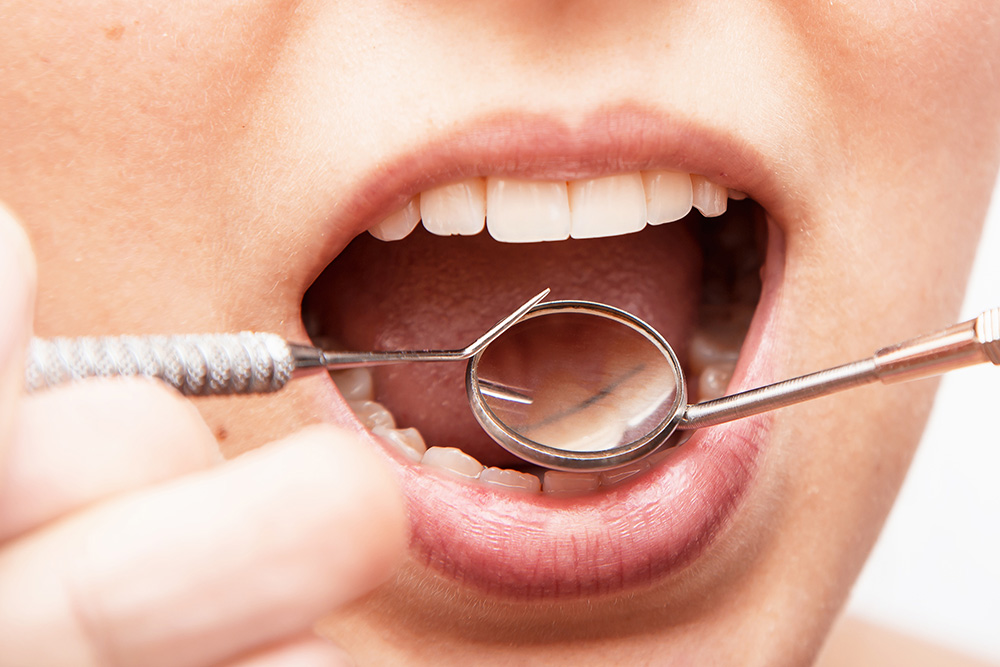
Gum irritation, bleeding, and persistent bad breath are often early warning signs of a deeper issue. Many patients do not realize that gum disease can progress quietly, leading to more serious problems like tooth loss and bone loss if left untreated. At Oakwood Dental in Bucyrus, Ohio, we provide comprehensive periodontal treatment focused on protecting long-term oral health and restoring gum health.
Dr. Attila Nagy, Dr. Michelle Nagy, and our team work together to help patients understand their condition and explore the right treatment options. Tooth decay and cavities are not the only reasons preventive dentistry and good oral hygiene habits are important; good oral care can also help prevent periodontal disease development. Through early intervention, proper treatment, and supportive care, we help manage periodontal disease and reduce the risk of future complications.
What Causes Periodontal Disease?
Periodontal disease can develop when plaque and tartar accumulate on the surface of the teeth and push the gums away. Normal, healthy gums should hug the surface of the teeth, but when they become separate, pockets of space develop between the gums and the teeth, and harmful bacteria thrive in these spaces.
Plaque and tartar can accumulate, leading to the development of periodontal disease, as a result of poor oral hygiene habits or failing to visit the dentist often enough for professional teeth cleanings.
Common Risk Factors For Gum Disease
Several risk factors can increase the likelihood of developing periodontal disease.
- Poor Oral Hygiene: Allows plaque and bacteria to build up along the gum line
- Tobacco Use: Can weaken the immune system and slow healing
- Hormonal Changes: May increase gum sensitivity and inflammation
- Dry Mouth: Reduces natural protection against bacteria
- Medical Conditions: Certain systemic health problems can affect gum health
Understanding these risk factors can help patients take steps to protect their oral health.
Periodontal Disease Signs and Symptoms
The signs and symptoms of periodontal disease include:
- Visible plaque and tartar buildup on the surface of the teeth
- Tender gums
- Red gums
- Swollen gums
- Receding gums
- Gums that bleed easily
- Persistently bad breath
- Tooth sensitivity
- Pus between the teeth
In more severe cases of periodontal disease in which bacteria have reached the periodontal ligaments, individuals with periodontal disease might also experience the following symptoms:
- Loose teeth and tooth loss
- A change in occlusion (the way the teeth bite together)
- Jawbone degeneration
Warning Signs To Watch For
Recognizing the warning signs early can make a difference in treatment outcomes.
- Bleeding Gums: Often one of the first signs of gum disease
- Gum Inflammation: Redness or swelling around the gum tissue
- Persistent Bad Breath: Caused by bacteria buildup
- Loose Teeth: May indicate advanced gum disease
- Gum Recession: Teeth may appear longer as gums pull back
If you notice these symptoms of gum disease, it is important to seek care promptly.
The Importance of Treating Periodontal Disease
In addition to the local effects, periodontal disease can also have a negative impact on the general health of an individual. The bacteria from periodontal disease can enter a person’s bloodstream and travel throughout the body, leading to generalized inflammation and a whole host of systemic issues. Periodontal disease has been associated with health problems such as cardiovascular disease, diabetes, dementia, rheumatoid arthritis, reproductive challenges, and more.
Additionally, periodontal disease puts individuals at an increased risk of suffering from respiratory infections like pneumonia because the elevated levels of bacteria in the mouth can be breathed in more easily. Treating periodontal disease is an important step not only for oral health but also for overall health and wellness.
Stages Of Gum Disease
Understanding the stages of gum disease can help guide proper treatment.
- Early Stages (Gingivitis): Mild gum inflammation without bone loss
- Moderate Periodontitis: Development of periodontal pockets and early bone loss
- Advanced Periodontitis: Deep pockets, loose teeth, and damage to the tooth root
- Severe Periodontitis: Significant bone loss and possible tooth loss
Each stage of gum disease requires a different approach to periodontal treatment.
How To Treat Periodontal Disease
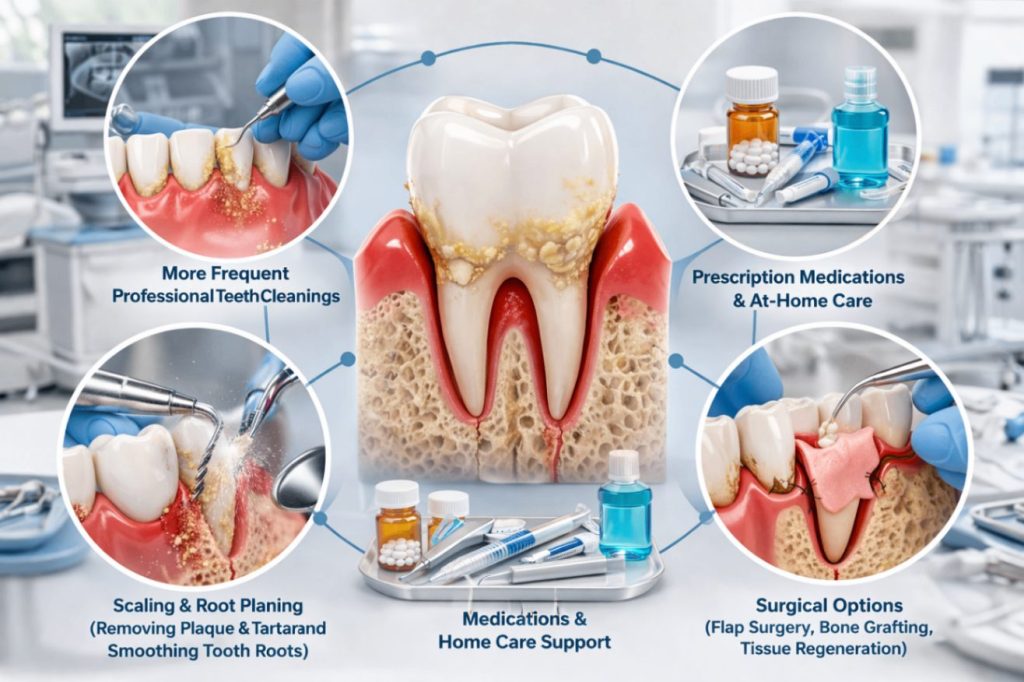
There are several treatments for periodontal disease, and the approach that works best for you depends on how advanced your case of periodontal disease is, in addition to your medical history and individual dental care needs.
More Frequent Professional Teeth Cleanings
We typically recommend more frequent dental exams and cleanings for all patients diagnosed with periodontal disease.
For patients with milder cases, more frequent cleanings are often all that is needed to arrest the progression of the infection and get the bacterial growth inside their mouths under control. In more advanced cases, additional treatments might be recommended, as well.
Prescription Medications and At-Home Care
Prescription antibiotics, antibiotic mouth rinses, and antibiotic gels and trays might be recommended and/or prescribed to help combat the bacteria responsible for periodontal disease.
Scaling and Root Planing
Scaling and root planing are two of the most common approaches to addressing periodontal disease. They involve scaling (scraping) the teeth to remove plaque and tartar buildup from the surface of the teeth above and below the gum line and planing the roots to smooth out their surfaces, discouraging bacterial growth.
Oral Surgery
In the most extreme cases of periodontal disease, gum surgery might be needed to remove dead and diseased tissues from the gums while sterilizing the bacteria that are present.
Frequently Asked Questions
Schedule Your Periodontal Consultation Today
If you are experiencing signs of gum disease or have concerns about your gum health, our team at Oakwood Dental in Bucyrus, Ohio is here to help. We provide personalized periodontal treatment designed to protect your smile and improve your oral health. Call our dental office today at 419-562-4378 to schedule your appointment and take the first step toward healthier gums.